 (605) 840-1531
  sanespor@gwtc.net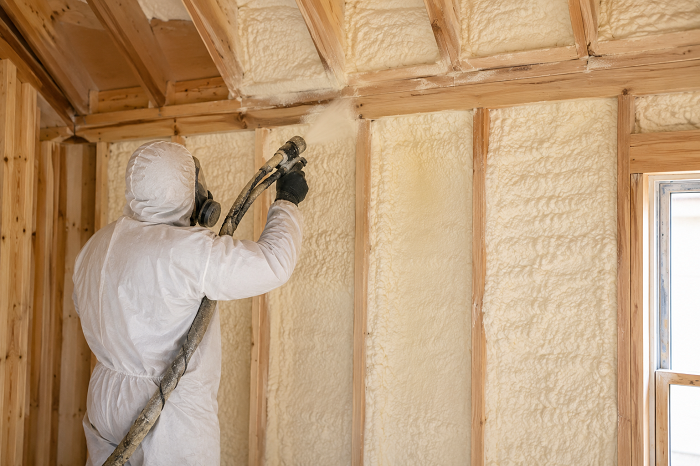
If you’ve lived through even one South Dakota winter, you already know what wind chill does to a poorly insulated house. The furnace runs nonstop, certain rooms never quite warm up, and your energy bill arrives looking like a typo. A lot of homeowners in this state are starting to look past fiberglass batts and blown-in cellulose toward something that actually seals a home rather than just filling a cavity. That’s where spray foam comes in, and it’s a decision worth understanding fully before a crew shows up at your door.
This guide walks through what spray foam insulation actually is, why it performs so differently in our climate compared to milder regions, what it costs, and how to tell a quality installation from a rushed one. Whether you’re insulating a new build, retrofitting an older farmhouse, or trying to fix a chronically cold room, you’ll find practical, real answers here, not just marketing talk.
Why South Dakota’s Climate Makes Insulation Choice So Important
South Dakota isn’t a state where you can afford to guess on insulation. Winters routinely dip well below zero with brutal wind chills, and summers can swing into the 90s with humidity that makes attics feel like ovens. That kind of temperature swing puts real stress on a home’s building envelope twice a year, not once.
Traditional insulation materials rely on trapped air pockets to slow heat transfer, but they don’t stop air movement itself. Tiny gaps around outlets, rim joists, sill plates, and attic penetrations let conditioned air leak out and cold air sneak in, no matter how thick the batt is. This is why two houses with the same R-value on paper can perform completely differently in practice. One has an airtight envelope, and one doesn’t.
Spray foam insulation South Dakota homeowners install today does two jobs at once. It insulates against heat transfer, and it forms an air barrier that stops drafts at their source. For a climate zone like ours, that combination matters more than in places with mild, stable weather.
How Spray Foam Actually Works
Spray foam insulation starts as two liquid components that get mixed and sprayed through a gun, expanding on contact and hardening within seconds. As it expands, it fills irregular gaps, corners, and cavities that rigid materials simply can’t reach. Once cured, it stays in place permanently. It doesn’t sag, settle, or lose loft the way fiberglass can over the years.
There are two main types used in residential work, and understanding the difference helps you have a smarter conversation with your contractor.
Open-cell spray foam is softer, lighter, and less expensive per board foot. It expands significantly during application, filling large cavities efficiently. It has a lower R-value per inch than closed-cell foam, but it’s a strong performer for interior walls, attic undersides, and sound dampening between floors.
Closed-cell spray foam is denser and rigid once cured. It has a much higher R-value per inch, adds structural rigidity to the area it’s applied to, and acts as a vapor barrier on its own. This makes it a common choice for rim joists, basement walls, and areas prone to moisture, which is a real consideration in South Dakota homes with basements that see spring thaw and seasonal groundwater shifts.
Choosing between the two isn’t just about budget. It depends on where in the house you’re insulating, whether moisture control is a concern, and how much of the existing structure you’re working around.
Where Spray Foam Insulation Makes the Biggest Difference
Not every part of a house benefits equally from spray foam, and a knowledgeable contractor should be able to explain where it earns its cost fastest.
Attics are usually the highest priority. Heat rises, and an under-insulated attic is often the single biggest source of winter heat loss and summer heat gain in a home. Spray foam applied to the roof deck or attic floor creates a continuous seal that stops both convective heat loss and air leakage at once.
Rim joists and sill plates, the band around the perimeter of a basement where the foundation meets the frame, are notorious for drafts. These narrow, irregular spaces are difficult to insulate well with batts, but spray foam fills them completely in one pass.
Basement walls benefit from closed-cell foam specifically because it resists moisture intrusion, which matters when foundation walls sit against damp soil for months of the year.
Crawl spaces, garages attached to living space, and additions with limited wall cavity depth are all places where spray foam’s expansion properties solve problems that traditional insulation struggles with.
Spray Foam Insulation South Dakota Homeowners Should Budget For
Cost is usually the first question, and it’s a fair one. Spray foam typically costs more upfront than fiberglass or cellulose, but the comparison isn’t apples to apples once you factor in performance and longevity.
Open-cell foam generally runs less per square foot than closed-cell, and pricing depends on the square footage being treated, the depth of the cavity, accessibility of the space, and whether it’s new construction or a retrofit into an existing structure. Retrofits tend to cost more because crews have to work around existing framing, wiring, and finished surfaces.
While the material and labor cost more than traditional batts, most homeowners see the difference reflected in lower monthly heating and cooling bills, often within the first few winters. Because spray foam also reduces air infiltration, HVAC systems don’t have to work as hard to maintain a consistent indoor temperature, which can extend the life of the equipment itself.
It’s worth getting a detailed, written estimate that breaks down square footage, foam type, and labor separately, rather than a single lump figure. A contractor who explains their pricing clearly is generally one who’s confident in their process.
What a Quality Installation Actually Looks Like
This is where a lot of homeowners get burned, not because spray foam doesn’t work, but because installation quality varies wildly between crews. A few things separate a professional job from a problematic one.
Proper mixing ratios matter enormously. Spray foam is a chemical reaction between two components, and if the ratio is off even slightly, the foam can shrink, stay tacky, or off-gas longer than it should. Experienced installers calibrate their equipment and monitor temperature and humidity conditions before spraying, since both affect how the foam cures.
Lift thickness matters too. Closed-cell foam in particular needs to be applied in specific lift thicknesses, often no more than an inch or two per pass, to avoid excess heat buildup during the exothermic curing reaction. Rushing this step can cause the foam to scorch or crack internally, which isn’t always visible from the surface.
Proper safety protocols during application, including ventilation and personal protective equipment, protect both the crew and the homeowner. And once cured, a good installer will inspect for full coverage, checking corners, penetrations, and edges where gaps commonly get missed.
This is exactly why choosing an experienced, local team matters so much. Nespor Contracting Inc has built a reputation across South Dakota for installations that are done right the first time, with technicians who understand how this region’s temperature and moisture conditions affect the curing process and long-term performance of the foam.
Common Misconceptions Worth Clearing Up
A few myths tend to follow spray foam around, so it’s worth addressing them directly.
One is that spray foam eliminates the need for ventilation. That’s not accurate. Homes still need proper attic and whole-house ventilation strategies, and a knowledgeable installer will design the insulation approach around your specific roof and attic configuration rather than applying a one-size-fits-all method.
Another misconception is that spray foam insulation South Dakota installers use is a DIY-friendly product. While small foam-in-a-can products exist for minor gap sealing, professional-grade spray foam requires specialized equipment, precise mixing, and safety measures that aren’t practical for a homeowner to manage safely or effectively.
Some people also assume all spray foam smells or off-gasses indefinitely. Properly cured, professionally installed foam should have minimal to no lingering odor once it fully sets, which typically happens within 24 to 72 hours depending on conditions.
Questions to Ask Before Hiring a Contractor
Before signing off on any project, ask how long the company has worked specifically with spray foam, not just general insulation. Ask which type of foam they recommend for your specific space and why. Ask how they handle ventilation planning, and request references from recent local jobs, ideally ones completed during a similar season to yours, since application conditions vary between summer and winter work.
A contractor who welcomes these questions and answers them in plain language, without rushing you toward a decision, is generally one worth trusting with a job this important.
Final Thoughts
Insulation isn’t the most exciting home improvement to think about, but it’s one of the few upgrades that quietly affects your comfort, your utility bills, and your home’s durability every single day, whether you notice it or not. In a state where the weather doesn’t do anything halfway, having an insulation system that actually keeps pace matters more than it might in milder climates.
Spray foam isn’t the right fit for every single application in a home, but for attics, rim joists, basements, and hard-to-reach cavities, it consistently outperforms traditional materials when it’s installed correctly. The key word there is correctly. The material itself is only half the equation. The experience, precision, and local knowledge of the crew applying it is the other half.
If you’re weighing your options for an upcoming project, take the time to get a proper inspection and a detailed quote before deciding. A team that takes the time to understand your home’s specific layout and climate exposure, like Nespor Contracting Inc, will typically deliver a result that performs the way it’s supposed to for decades, not just the first winter