 (605) 840-1531
  sanespor@gwtc.net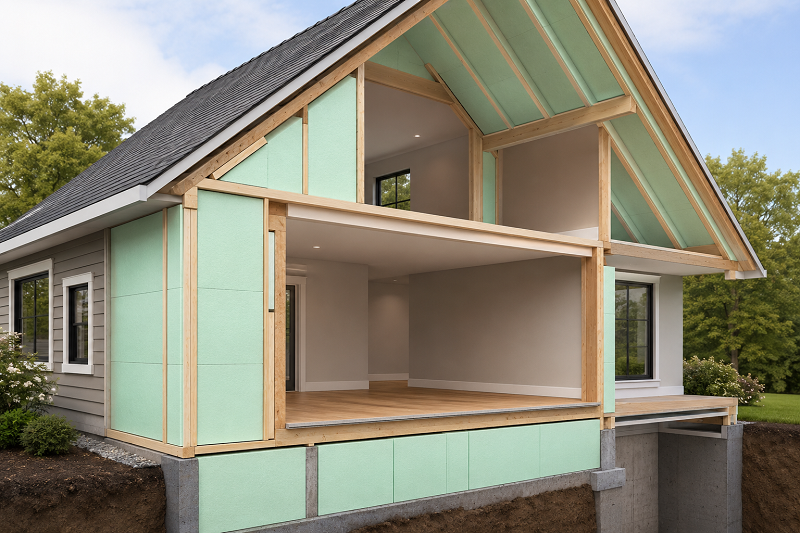
If you have ever stood inside a poorly insulated building on a hot San Diego afternoon, you already know the feeling. That stuffy, heavy air that no amount of ceiling fans can fix. The kind of discomfort that makes you question every decision the previous owner ever made. It is not just uncomfortable — it is expensive. And in most cases, the problem starts and ends with insulation.
That is where hard closed cell foam steps in. Not as a trendy fix or a marketing buzzword, but as a genuinely reliable material that has been quietly changing the way homes and commercial buildings are built and upgraded across Southern California.
This guide is going to walk you through everything that matters — what this material actually is, how it performs under real conditions, where it works best, and why more San Diego property owners are making it a non-negotiable part of any serious renovation or new build.
Understanding the Science Behind Hard Closed Cell Foam in SD
Before diving into applications and benefits, it helps to understand what you are actually dealing with at a structural level.
Closed cell foam is made up of tiny cells that are, as the name suggests, completely sealed off from one another. These cells are packed tightly together and filled with gas, which is a big part of what gives the material its impressive insulating power. Unlike open cell foam, where the cells are connected and air can pass between them, closed cell foam creates a dense, rigid barrier.
The “hard” quality comes from this density. When fully cured, it does not compress easily under pressure. You can push against it and feel genuine resistance. That firmness is not a flaw — it is a feature. It means the material holds its shape over time, does not sag inside wall cavities, and continues performing decades after installation.
The R-value, which measures thermal resistance, typically lands between R-6 and R-7 per inch for closed cell spray foam. That is significantly higher than fiberglass batts or even open cell alternatives. In practical terms, you can achieve excellent insulation performance with a thinner application, which matters enormously when you are working with limited wall depth or trying to maximize usable interior space.
Hard Closed Cell Foam in SD also acts as a vapor barrier. The sealed cell structure prevents moisture from passing through, which is a critical consideration in coastal San Diego environments where salt air and humidity are not just occasional guests — they show up year-round.
Where Hard Closed Cell Foam in SD Gets the Job Done
One of the reasons this material has built such a strong reputation is its versatility. It does not belong to just one type of project or one part of a building. It earns its place in a remarkable range of applications.
Exterior walls and rooflines are among the most common uses. When applied to exterior-facing surfaces, hard closed cell foam creates a continuous thermal envelope that dramatically reduces the transfer of heat from outside to inside. For San Diego buildings that deal with intense summer sun beating down on west-facing walls, this makes a measurable difference in indoor comfort and cooling costs.
Crawl spaces and basements benefit enormously from closed cell foam because of its moisture resistance. These areas are notorious for humidity problems, and once mold takes hold in a crawl space, the remediation costs are significant. Applying hard closed cell foam to crawl space walls and floors cuts off the moisture pathway before the problem starts.
Attics are another high-priority area. A poorly insulated attic in San Diego can account for a staggering amount of energy loss — some estimates suggest close to 40 percent of a home’s total energy waste moves through an under-insulated attic. Closed cell foam in unvented attic applications seals the roof deck, keeping conditioned air inside where it belongs.
Commercial and industrial buildings also turn to this material for good reason. Whether it is a warehouse in Otay Mesa or a restaurant in the Gaslamp Quarter, the combination of thermal performance, moisture resistance, and structural reinforcement makes hard closed cell foam a practical investment rather than just a comfort upgrade.
Automotive and marine applications are worth mentioning too. The foam’s water resistance and structural integrity make it useful in boat construction, vehicle panel decoupling, and specialty upholstery work.
The Real-World Benefits That Actually Matter
Let us talk about what property owners actually experience after installation, not just what the spec sheets say.
Lower energy bills are typically the first thing people notice. When your building envelope stops leaking conditioned air, your HVAC system does not have to work nearly as hard to maintain temperature. In San Diego’s climate, where air conditioning runs for a good portion of the year, that reduction in system load translates directly into monthly savings. Many homeowners report noticeable decreases in utility costs within the first billing cycle after installation.
Structural reinforcement is a benefit that often catches people off guard. When hard closed cell foam is sprayed into wall cavities or onto roof decking, it bonds to the surrounding surfaces and actually adds rigidity to the structure. This is not just a theoretical benefit — it matters during high-wind events and adds measurable racking strength to framed walls.
Air quality improvement follows naturally from proper sealing. When gaps and cracks are filled, outside dust, pollen, and coastal pollutants have fewer entry points into your living or working space. For anyone dealing with allergies or respiratory sensitivities, this is not a minor quality-of-life upgrade — it is a significant one.
Mold and mildew resistance is especially relevant for San Diego properties near the coast. Because closed cell foam does not absorb water and does not provide organic material for mold to feed on, it creates an inhospitable environment for growth. This is a long-term protective measure that saves money on remediation and protects the health of building occupants.
Sound dampening is an added bonus that many clients only discover after installation. The dense foam structure absorbs vibration and reduces the transmission of noise between rooms and from outside. In urban settings or near busy roads, this acoustic benefit becomes a genuine selling point.
Hard Closed Cell Foam in SD and the San Diego Climate Advantage
San Diego’s climate is genuinely unique. It is mild enough that many people underestimate their insulation needs, but variable enough — with coastal humidity, inland heat spikes, and occasional cold snaps — that the right insulation strategy pays off significantly.
Hard Closed Cell Foam in SD is particularly well-suited to this environment for a few reasons. The coastal air carries salt and moisture that can degrade certain building materials over time. Closed cell foam is chemically resistant and does not break down under these conditions. It also handles the temperature swings between coastal mornings and inland afternoons without losing its insulating properties or structural integrity.
For buildings close to the water, the vapor barrier function is arguably the most important feature. Salt air is corrosive, and moisture intrusion into wall cavities can cause damage that is invisible until it becomes serious. Closed cell foam addresses this at the source.
Choosing the Right Contractor Makes All the Difference
Even the best material underperforms if it is not applied correctly. Closed cell spray foam requires precise mixing ratios, proper temperature conditions during application, and attention to coverage depth to achieve its rated performance. These are not DIY-friendly variables.
Working with an experienced contractor who understands San Diego’s specific building conditions is essential. Nespor Contracting Inc brings exactly this kind of hands-on regional expertise to every project. Their team understands the nuances of coastal versus inland applications, the building code requirements specific to San Diego County, and the practical considerations that come from years of working with this material across diverse property types.
When you choose a contractor like Nespor Contracting Inc, you are not just paying for labor. You are paying for the knowledge that the job will be done right the first time, with the right product in the right places at the right depth. That expertise is what turns a good material into a great long-term investment.
Density, R-Value, and What the Numbers Actually Mean
There is some useful technical context that helps when comparing options or talking to contractors.
Closed cell spray foam typically comes in two common densities for building applications. Two-pound closed cell foam is the standard for most wall and roof applications, offering that R-6 to R-7 per inch range and excellent vapor control. Three-pound foam is used in more demanding applications, particularly exterior roofing, where additional compressive strength and weather resistance are priorities.
Understanding that higher density means more material per cubic foot, more rigidity, better moisture resistance, and better structural contribution helps you have informed conversations about what your specific project actually needs. Not every application requires the densest option, and a knowledgeable contractor will guide you toward the right specification rather than simply upselling the most expensive product.
A Practical Investment With Long-Term Returns
The upfront cost of hard closed cell foam is higher than fiberglass batts or blown-in cellulose. There is no point pretending otherwise. But the comparison does not end at purchase price.
Fiberglass loses effectiveness when it gets wet, which it will in a humid environment over time. It does not seal air gaps on its own. It does not add structural strength. And it requires periodic inspection and replacement in certain applications. Closed cell foam, properly installed, simply keeps working. It does not sag, does not absorb moisture, does not need to be replaced, and continues delivering thermal performance for the life of the building.
When you factor in energy savings, reduced maintenance, improved moisture management, and structural contribution, the total cost picture looks very different from the upfront number alone. Most San Diego property owners find that the investment pays for itself within a few years through utility bill reductions.
Final Thoughts
There is something satisfying about materials that simply do what they are supposed to do, year after year, without drama. Hard closed cell foam is that kind of material. It does not require much attention once it is in place. It just performs.
For San Diego homeowners and commercial property owners navigating the real challenges of coastal humidity, intense sun, variable temperatures, and rising energy costs, the case for closed cell foam insulation is not hard to make. The properties are right, the applications are broad, and the long-term return is solid.
Whether you are building new, renovating, or simply trying to fix an existing comfort problem, getting the insulation right is one of the highest-impact decisions you can make. And when you are ready to take that step, partnering with a contractor who knows this material and this market, like Nespor Contracting Inc, is what turns a good decision into a great outcome.