 (605) 840-1531
  sanespor@gwtc.net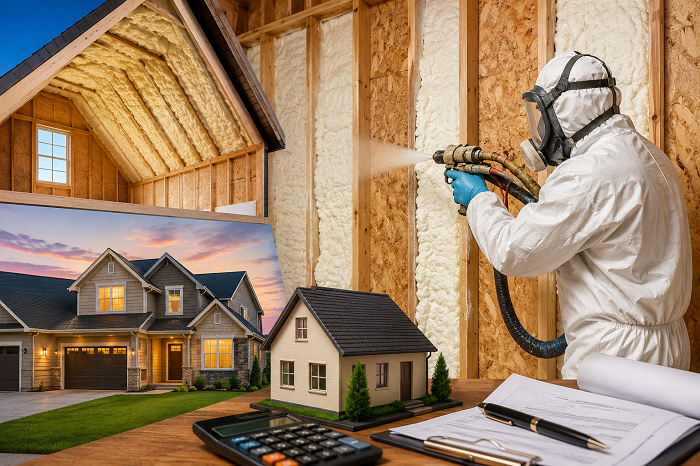
If you have ever spent a January morning in Rapid City shivering despite the furnace running on full blast, you already understand why insulation is not just a building detail but a survival strategy. South Dakota winters are not polite. They arrive hard and stay late, and they expose every weakness in a home’s thermal envelope with brutal efficiency. Summer is no gentler, pushing attic temperatures past the point where standard insulation simply gives up.
That is the reality homeowners and business owners here deal with every single year. And it is exactly why more people across the state are turning to Spray Foam Insulation Services as a long-term fix rather than a seasonal patch job.
This guide covers everything you actually need to know: the real benefits, honest cost breakdowns, what the installation process looks like, and how to choose the right contractor. No fluff, no filler.
Why Spray Foam Insulation Services Work So Well in South Dakota’s Climate
South Dakota sits in a climate zone that demands high-performance building envelopes. Temperatures swing from well below zero in the winter to scorching highs in the summer, and the wind does not help. Traditional fiberglass batts and blown cellulose have served homeowners for decades, but they come with a fundamental limitation: they insulate, but they do not seal.
Air leakage is responsible for a significant portion of heating and cooling losses in residential buildings. Even a perfectly installed fiberglass batt leaves gaps around electrical boxes, plumbing penetrations, rim joists, and irregular framing. Cold air finds those gaps the way water finds cracks in concrete.
Spray polyurethane foam, on the other hand, expands on contact to fill every irregular space, forming a continuous barrier that blocks both heat transfer and air movement simultaneously. This dual action is what separates it from every other product on the market.
There are two main types worth understanding:
Open-Cell Spray Foam is lighter, softer, and more affordable. It expands aggressively and is excellent for interior walls, soundproofing, and attic spaces where vapor permeability is acceptable or even desirable. R-value per inch sits around 3.5 to 3.8.
Closed-Cell Spray Foam is denser, more rigid, and delivers an R-value of around 6.0 to 7.0 per inch. It acts as both an insulator and a vapor barrier, making it the preferred choice for crawl spaces, basement walls, exterior sheathing applications, and areas where moisture is a concern. In South Dakota, where ground moisture and frost penetration are real issues, closed-cell foam in crawl spaces and rim joists is often money well spent.
Beyond thermal performance, spray foam adds structural rigidity to walls and rooflines. It will not sag, settle, or absorb moisture over time. Once cured, it is essentially inert and will outlast the building it is installed in.
Where Spray Foam Makes the Biggest Difference in South Dakota Buildings
Not every part of a home delivers equal return on insulation investment. Understanding where air infiltration and heat loss are worst helps prioritize the work.
Attics and Rooflines: Heat rises, and poorly insulated attics bleed warmth all winter. In summer, radiant heat from the roof drives attic temperatures extremely high, baking the living space below. Spraying closed-cell foam directly onto the underside of the roof deck creates an unvented conditioned attic that dramatically reduces HVAC load.
Crawl Spaces: South Dakota crawl spaces are often damp, drafty, and poorly sealed. Cold air and moisture migration from below is a major source of discomfort and structural damage. Encapsulating crawl space walls and the rim joist with spray foam transforms a problem area into a dry, stable, conditioned zone.
Rim Joists: One of the most overlooked areas in any home. The rim joist, the framing member sitting directly on the foundation wall, is notoriously difficult to insulate with batts. Spray foam seals it completely in a single step.
Pole Barns and Agricultural Buildings: South Dakota has no shortage of working buildings, shops, garages, and outbuildings that need insulation but do not fit standard residential framing. Spray foam works beautifully on metal and wood surfaces alike, making it a natural fit for agricultural and commercial applications.
Nespor Contracting Inc has worked extensively across these building types throughout South Dakota, and their team understands the specific challenges each one presents.
What It Actually Costs: Honest Numbers for South Dakota Projects
Cost is always the first real question, and the answer depends on several variables: the type of foam, the area being covered, the thickness required to hit the target R-value, and the accessibility of the installation area.
As a general benchmark:
- Open-cell foam typically runs between $0.44 and $0.65 per board foot (a board foot = one square foot at one inch thick)
- Closed-cell foam typically runs between $1.00 and $1.50 per board foot
For a typical South Dakota home insulating an attic of around 1,200 square feet to 3.5 inches of closed-cell foam, total material and labor costs might range from $4,500 to $9,000 depending on complexity, access, and regional contractor rates.
Crawl space encapsulation on a modest footprint might run $1,800 to $4,500, while a full rim joist treatment on a standard home could be done for $600 to $1,500.
These numbers are not meant to be final quotes, they are starting points. A reputable contractor like Nespor Contracting Inc will assess your specific space and provide a detailed estimate before any work begins.
What the numbers do not show is the return side of the equation. Most homeowners who upgrade from fiberglass to spray foam report heating and cooling bill reductions in the range of 30% to 50%. Over a 10-year period, those savings routinely exceed the upfront installation cost, making spray foam one of the few home improvements with a quantifiable financial return.
The Installation Process: What to Expect
Understanding what the installation involves helps homeowners prepare and also helps them evaluate whether a contractor is doing the job correctly.
Before the Crew Arrives: The space needs to be clear. In attics, stored items should be removed or moved away from the installation area. In crawl spaces, existing debris, old insulation, or vapor barriers are typically removed first. The contractor will seal off vents and cover surfaces that should not receive overspray.
The Application Itself: Two-component spray foam is mixed and heated as it passes through the spray gun. It lands as a liquid and expands within seconds, adhering to virtually any surface and filling every gap and void. The installer works in passes, building up thickness to achieve the desired R-value. A typical residential attic installation takes between 4 and 8 hours. Crawl spaces and rim joists usually go faster.
Curing and Ventilation: Spray foam offgasses during and immediately after application. The space should be vacated and well-ventilated for at least 24 hours post-installation. Professional contractors will advise on exact re-entry timelines based on the specific product used.
Post-Install Inspection: Once cured, the foam is stable and requires no maintenance. A good contractor will walk through the finished area with you, confirm coverage, and address any questions before closing out the job.
Nespor Contracting Inc takes a walkthrough approach with every project, making sure homeowners understand what was done and why before the crew leaves the site.
Choosing the Right Contractor for Spray Foam Insulation Services
This is where homeowners often go wrong. Spray foam is a high-performance product, but only when it is installed correctly. Poor mixing ratios, improper substrate prep, or inadequate thickness all compromise the end result, sometimes significantly.
A few things worth verifying before signing any contract:
Licensing and Insurance: South Dakota requires contractors to hold appropriate licensing. Ask for proof of general liability and workers’ compensation coverage before any work starts.
Experience with Your Building Type: A contractor who mostly does new construction may approach a retrofit crawl space differently than one who specializes in it. Ask specifically about projects similar to yours.
Product Transparency: Reputable installers will tell you exactly what brand and formulation they are using. Cheap off-brand products often have inconsistent yield and lower real-world performance.
References: Ask for local references and, if possible, talk to homeowners who had similar work done at least two or three years ago. That gives you a sense of how the installation has held up over South Dakota winters.
Nespor Contracting Inc has built its reputation in South Dakota on transparency and consistent results. Their team provides detailed written estimates, explains product choices, and backs their work with clear warranty terms.
A Final Word
Insulation is one of those investments that works quietly in the background, every hour of every season, reducing the energy needed to keep your home or building comfortable. South Dakota’s climate makes it one of the highest-value upgrades any property owner here can make.
The right product installed correctly by people who know what they are doing changes how a building feels and what it costs to maintain. If you have been dealing with drafty rooms, high utility bills, or moisture problems in your crawl space, a conversation with a qualified contractor about Spray Foam Insulation Services is the logical next step.
Reach out to Nespor Contracting Inc to discuss your project. They serve homeowners and commercial clients throughout South Dakota with a focus on honest assessments, quality materials, and installations that actually perform the way they are supposed to.
Because in this climate, getting it right the first time is not a luxury. It is the whole point.