 (605) 840-1531
  sanespor@gwtc.net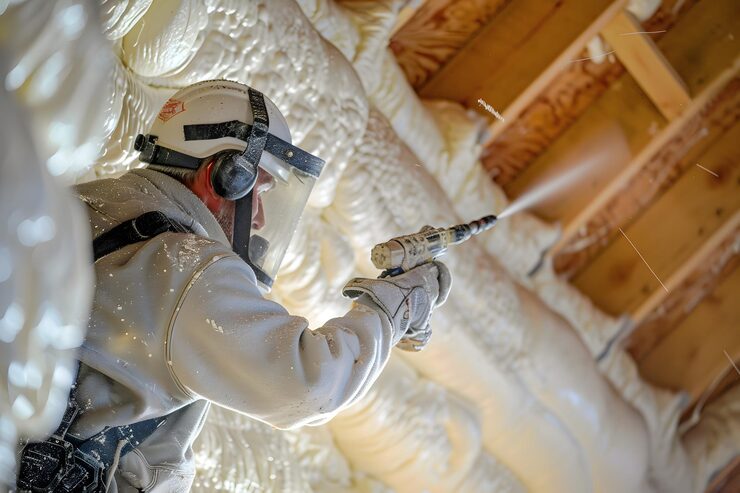
Quick Answer: Most spray foam insulation services in South Dakota are completed in a single day for an average home, though larger residential, commercial, or agricultural projects can take two to three days. Every project timeline differs based on square footage, foam type (open-cell vs. closed-cell), accessibility of attics or crawl spaces, and current insulation conditions. Common procedures include a free on-site estimate, site prep, foam application, and a final walkthrough. Proper planning around these factors ensures long-term energy savings, structural protection, and a comfortable home no matter what South Dakota’s weather brings.
South Dakota doesn’t do mild weather. Winters can plunge well below zero with brutal wind chills, while summers regularly climb into the triple digits. That kind of seasonal swing puts enormous stress on a building’s insulation and traditional materials often can’t keep up. Spray foam insulation services in South Dakota have become the go-to solution for homeowners and business owners who are tired of drafty rooms, spiking utility bills, and insulation that seems to need replacing every few years.
Nespor Contracting Inc. has helped families and business owners across the Pierre area and surrounding South Dakota communities upgrade their properties with professional-grade spray foam insulation services in South Dakota. Whether you’re looking to lower your monthly energy bills, protect your home from moisture damage, or simply make your living space more comfortable year-round, spray foam insulation delivers results that traditional fiberglass and cellulose simply can’t match. This guide walks through everything you need to know: how the process works, what it costs, and why it’s one of the smartest home improvement investments you can make in this climate.
Why South Dakota Homes & Businesses Need Spray Foam Insulation
The Challenge of South Dakota’s Climate
South Dakota winters bring sustained sub-zero temperatures and biting wind that finds its way through every gap, crack, and poorly sealed joint in a structure. Come summer, that same building has to fight off intense heat and humidity. This constant back-and-forth puts extra strain on HVAC systems and drives energy costs higher year after year. A building envelope that isn’t properly sealed simply cannot keep pace with these extremes.
How Traditional Insulation Falls Short
Fiberglass batts and blown-in cellulose have been standard for decades, but they come with real limitations. Fiberglass tends to leave gaps around wiring, plumbing, and framing — and those gaps are exactly where cold air sneaks in during winter. Over time, traditional insulation also settles and compresses, losing effectiveness. It offers little resistance to moisture, which means it’s vulnerable to mold growth, especially in South Dakota’s humid summer months and damp basements.
The Spray Foam Advantage
Spray foam insulation services in South Dakota solve these problems by creating a continuous, air-tight seal. Unlike batts or loose-fill material, spray foam expands to fill every crevice, forming a barrier that doesn’t settle or shift over time. It also acts as a moisture barrier, which is particularly valuable in basements, crawl spaces, and agricultural buildings where humidity control is critical. The result is a tighter building envelope that keeps conditioned air in and outside air out, no matter the season.
How Spray Foam Insulation Cuts Energy Bills by Up to 50%
Air Sealing vs. Just Insulating
Insulation alone only tells part of the story. A home can have thick fiberglass batts and still leak air like a sieve if there are unsealed gaps around outlets, framing, and penetrations. Air sealing is what actually stops drafts, and spray foam does both jobs at once — insulating and sealing in a single application. That combination is a major reason foam insulation services in South Dakota consistently outperform traditional materials in real-world energy savings.
R-Value Explained
R-value measures a material’s resistance to heat flow — the higher the number, the better the insulating power. Closed-cell spray foam typically delivers an R-value of R-6 to R-7 per inch, nearly double what you’d get from an equivalent thickness of fiberglass. That means you can achieve superior thermal performance without needing to add excessive material, which is especially useful in tight attic spaces or wall cavities.
Real Numbers: Heating and Cooling Cost Reduction
Homeowners who switch from traditional insulation to spray foam commonly see heating and cooling costs drop by 30% to 50%, depending on the size and condition of the home before the upgrade. Because spray foam eliminates air leaks almost entirely, your furnace and air conditioner don’t have to work overtime compensating for drafts, which translates directly into lower monthly utility bills.
Closed-Cell vs. Open-Cell Spray Foam: Which Is Right for You?
Choosing between closed-cell and open-cell spray foam depends on where it’s being installed and what you’re trying to accomplish. Nespor Contracting Inc. offers both closed-cell insulation and open-cell insulation services, and a technician can help determine the right fit during your free estimate.
Closed-Cell Foam
Closed-cell spray foam is dense, rigid, and highly resistant to moisture, making it the preferred choice for exterior walls, basements, and areas where structural reinforcement matters. Its higher R-value per inch also makes it ideal for spaces with limited depth, since you get more insulating power without needing extra thickness.
Open-Cell Foam
Open-cell spray foam is softer and more flexible, which makes it excellent for soundproofing interior walls and insulating attics. It’s also more budget-friendly than closed-cell foam, so it’s a popular option for homeowners who want strong thermal performance without the higher price tag of closed-cell applications.
Comparison Table: Closed-Cell vs. Open-Cell Spray Foam
| Feature | Closed-Cell Foam | Open-Cell Foam |
|---|---|---|
| R-Value per inch | R-6 to R-7 | R-3.5 to R-3.7 |
| Moisture Resistance | Excellent (acts as vapor barrier) | Limited (not moisture-resistant) |
| Density | Rigid, adds structural strength | Soft, flexible |
| Best Use Case | Basements, exterior walls, crawl spaces | Attics, interior walls, soundproofing |
| Cost | Higher per board foot | More budget-friendly |
Nespor Contracting Inc.’s Spray Foam Services in South Dakota
Residential Insulation
From attics and crawl spaces to basements and exterior walls, Nespor Contracting Inc. provides full-home spray foam insulation services in South Dakota designed to eliminate drafts and lower energy costs for families throughout the region.
Commercial Insulation
Offices, retail spaces, and warehouses all benefit from spray foam’s ability to maintain stable indoor temperatures while reducing HVAC strain — an important factor for businesses managing overhead costs in a climate with such extreme seasonal swings.
Agricultural Insulation
Barns, pole buildings, and other farm structures face unique insulation challenges, including humidity control and temperature regulation for livestock or equipment. Spray foam’s moisture-resistant properties make it especially well-suited to agricultural applications across South Dakota.
Service Areas
Nespor Contracting Inc. proudly serves Pierre and the surrounding South Dakota communities, bringing local climate expertise to every residential, commercial, and agricultural insulation project. You can view a full breakdown of offerings on the insulation services page.
What to Expect: The Spray Foam Installation Process
Understanding the installation process helps set realistic expectations for your project timeline. Here’s what typically happens, step by step:
- Free On-Site Estimate — A technician visits your property to assess square footage, current insulation conditions, and which areas need attention. This is also when you’ll discuss whether closed-cell, open-cell, or a combination is right for your space.
- Site Prep & Safety Measures — Before application begins, the crew preps the work area, protects surfaces that shouldn’t be sprayed, and sets up proper ventilation and safety equipment.
- Application — Using specialized equipment, the team applies closed-cell or open-cell foam as needed, working section by section to ensure even coverage and a complete air seal.
- Inspection & Walkthrough — Once the foam has cured, the crew inspects the work and walks you through the results, answering any questions about maintenance or what to expect going forward.
Most residential jobs are completed within a single day, though larger homes, commercial buildings, or agricultural structures may require two to three days depending on square footage and complexity.
Why Choose Nespor Contracting Inc.?
Local Expertise in South Dakota’s Climate
Because Nespor Contracting Inc. is based locally, the team understands exactly how South Dakota’s temperature swings affect insulation performance — knowledge that out-of-state contractors simply don’t have.
Quality Materials & Certified Application
Every project uses professional-grade spray foam materials applied by trained technicians, ensuring consistent coverage and long-lasting results.
Customer Testimonials
Customers frequently mention how noticeably warmer their homes feel in winter after a spray foam upgrade, along with the relief of watching heating bills drop. Others highlight how quiet their homes became once open-cell foam was added to interior walls, and how quickly the crew completed the job without disrupting their daily routine.
Free Estimates & Transparent Pricing
Every project starts with a free, no-obligation estimate, so you know exactly what to expect before committing. To get started, reach out through the Nespor Contracting Inc. contact page or learn more about the team behind the work on the our team page.
Frequently Asked Questions
How much would it cost to spray foam for 1,000 sq ft?
Costs vary based on foam type and thickness, but homeowners can generally expect spray foam insulation for a 1,000 square foot area to range from a few thousand dollars for open-cell applications up to a higher range for closed-cell foam, given its denser material and higher R-value. A free on-site estimate is the most accurate way to get pricing specific to your property.
How much does 2 inches of spray foam cost?
Pricing for 2 inches of spray foam depends on whether you choose open-cell or closed-cell material, as closed-cell typically costs more per board foot due to its higher density and moisture resistance. Square footage, accessibility, and local labor rates also factor into the final price.
Is spray foam worth the extra cost?
For most South Dakota homeowners, yes. While spray foam typically costs more upfront than traditional fiberglass or cellulose, the combination of superior R-value, air sealing, and moisture resistance leads to significant long-term energy savings — often 30% to 50% off heating and cooling costs — along with a longer lifespan than traditional insulation.
How much does spray foam cost per board foot?
Spray foam is typically priced per board foot, with open-cell foam costing less than closed-cell foam due to differences in density and material composition. Exact pricing depends on the scope of the project and is best confirmed through a personalized estimate.
How much can spray foam insulation save on energy bills in South Dakota?
Given the state’s extreme seasonal temperature swings, spray foam insulation services in South Dakota commonly reduce heating and cooling costs by 30% to 50%, thanks to the air-tight seal it creates throughout the building envelope.
What’s the difference between open-cell and closed-cell spray foam?
Closed-cell foam is denser, offers a higher R-value per inch, and resists moisture, making it ideal for basements and exterior walls. Open-cell foam is softer, more affordable, and better suited for interior applications like attics and soundproofing.
How long does spray foam insulation last?
Properly installed spray foam insulation can last the lifetime of the building, since it doesn’t settle, sag, or compress the way traditional insulation materials do over time.
Is spray foam insulation worth the cost in South Dakota’s climate?
Yes. South Dakota’s extreme winters and hot summers make air sealing especially valuable, and spray foam’s combination of insulation and air-tight sealing typically pays for itself through reduced energy bills over time.
Does Nespor Contracting Inc. offer free estimates?
Yes, Nespor Contracting Inc. provides free, no-obligation on-site estimates for residential, commercial, and agricultural spray foam insulation projects throughout South Dakota.
Get Your Free Spray Foam Insulation Estimate Today
South Dakota’s weather isn’t getting any milder, and every season you wait is another season of higher energy bills. Whether you need residential, commercial, or agricultural insulation, Nespor Contracting Inc. is ready to help you seal out the cold, block out the heat, and start saving. Contact Nespor Contracting Inc. today for your free, no-obligation spray foam insulation estimate — and lock in your savings before the next big seasonal swing hits.