 (605) 840-1531
  sanespor@gwtc.net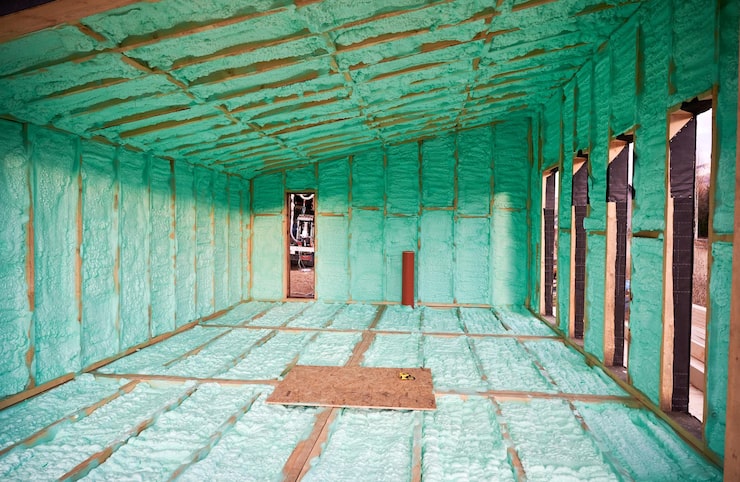
If you have lived through even one South Dakota winter, you already know the wind does not knock politely. It finds every gap around a window frame, every thin spot in an attic, every corner where old insulation has settled and left a hollow. That is exactly why more homeowners across Sioux Falls, Rapid City, and the smaller towns in between are asking their contractors about cell spray foam South Dakota installers offer, instead of sticking with the fiberglass batts their parents used. It is not a trend chasing a buzzword. It is a practical shift driven by brutal winters, dry summers, and energy bills that keep climbing no matter how careful people try to be.
This article walks through why that shift is happening, what closed cell spray foam actually does differently, and what homeowners in this state should know before they sign a contract with anyone, including a company like Nespor Contracting Inc.
What Makes Closed Cell Spray Foam Different
Traditional insulation, whether it is fiberglass batts or blown-in cellulose, works by trapping pockets of air. That air resists heat transfer, which is the whole point of insulation. The problem is that these materials are porous. Air moves through them slowly, and over years, gravity, moisture, and pests cause them to settle or degrade. A wall that was rated R-19 when it was installed might be functioning closer to R-13 a decade later, and most homeowners never know it because you cannot see insulation performance with your eyes.
Closed cell spray foam works on a completely different principle. It is applied as a liquid that expands and hardens into a rigid material with tightly packed, closed cells. Because the cells are sealed off from each other, the foam does not just slow air movement, it blocks it almost entirely. It also blocks moisture, which is a big deal in a climate that swings between snowmelt in spring and dry, cracking cold in January. This is the core reason so many people researching cell spray foam South Dakota contractors keep landing on the same conclusion: it solves two problems at once, insulation and air sealing, rather than requiring separate products and separate labor.
There is also a structural benefit that often gets left out of the conversation. Closed cell foam has enough rigidity and density that it adds a measurable amount of racking strength to a wall assembly. For homeowners in areas that deal with strong prairie winds, that is not a minor detail.
Why South Dakota’s Climate Makes This Personal
South Dakota is not a mild climate zone. Winters regularly drop well below zero with wind chills that make single digit temperatures feel like a threat. Summers, particularly in the southeastern part of the state, bring heat and humidity that push air conditioners to their limit. A home that is not properly sealed pays for that swing twice, once in December and again in July.
Homeowners who switch to spray foam often describe the change in very human terms. They talk about a room that used to feel cold no matter what the thermostat said, or a floor above the garage that never warmed up. They talk about how a furnace used to run almost constantly during a cold snap, then finally cycling normally after insulation work was done. These are not just comfort stories, they are direct evidence of air leakage being solved. When a house stops losing conditioned air through hidden gaps, the heating and cooling system does not have to fight a losing battle around the clock.
This is where a properly installed Cell spray foam South Dakota application earns its reputation. It is not marketed as a luxury upgrade. For a lot of families here, it is treated more like storm windows or a good furnace filter, a practical investment that pays for itself in comfort long before it pays for itself in dollars.
The Energy Bill Conversation Homeowners Are Having
Energy costs in the upper Midwest are not decorative numbers on a bill, they are a real household expense that people plan around. When homeowners insulate with closed cell foam, they are sealing the building envelope in a way that batt insulation simply cannot match. Air sealing is often responsible for a large share of energy savings in a retrofit, sometimes more than the insulation value itself, because heated or cooled air escaping through cracks and gaps is pure waste.
- Several things tend to happen after a proper spray foam installation:
- The furnace and air conditioner cycle less often because the indoor temperature stays more stable.
- Rooms that used to run several degrees colder or hotter than the rest of the house start to match the thermostat setting.
- Ice damming on rooflines, a common and costly problem in this state, becomes less likely because attic heat loss is reduced.
- Drafts near outlets, baseboards, and window trim disappear because the foam seals penetrations that batt insulation was never able to reach in the first place.
None of this means a bill drops to zero. It means the home stops wasting energy on gaps that were never doing anyone any good. Over a full winter and summer cycle, that adds up to noticeably lower usage, which is usually the first thing homeowners mention when they talk to friends or neighbors about the switch.
Health, Moisture, and Indoor Air Quality
There is a quieter reason behind this shift that does not get talked about as much as energy savings, and that is indoor air quality. Fiberglass insulation can hold onto moisture if it gets wet, and once that happens it becomes a place where mold can start, particularly in rim joists, crawl spaces, and attic areas where humidity naturally collects. Closed cell spray foam does not absorb water the same way. Its structure resists moisture penetration, which lowers the risk of the kind of hidden mold growth that homeowners often do not discover until there is already a musty smell or a health complaint in the house.
For families with allergies or young children, this matters. A tighter building envelope also reduces the amount of outdoor dust, pollen, and rodent access that can work its way into wall cavities. It is not a replacement for proper ventilation, and any responsible contractor will talk about balancing airtightness with mechanical ventilation, but it is a meaningful upgrade over insulation that was never designed to manage moisture in the first place.
What Homeowners Should Know Before Installing
Not every part of a home needs the same insulation strategy, and a good contractor offering cell spray foam South Dakota services will walk through this rather than pushing one product everywhere. Closed cell foam is usually prioritized in rim joists, crawl spaces, attics, and areas prone to moisture or air leakage, since that is where it delivers the most value per square foot. Some homeowners choose a hybrid approach, using closed cell foam in the highest impact areas and other insulation methods elsewhere to manage cost.
Cost is worth addressing honestly. Closed cell spray foam costs more upfront than fiberglass batts. Homeowners considering the switch should ask for a clear, itemized quote, a explanation of which areas will be treated, and a realistic estimate of how long the payback period is based on their current energy usage. A contractor who is confident in their work will not avoid these questions.
This is the approach Nespor Contracting Inc takes with homeowners across the region, walking through the home area by area instead of offering a one size fits all quote. That kind of transparency tends to be the difference between a homeowner who feels good about the investment five years later and one who feels like they were sold something they did not fully understand.
Frequently Asked Questions
Is closed cell spray foam worth the higher cost compared to fiberglass? For most South Dakota homes, yes, particularly in attics, rim joists, and crawl spaces where air leakage and moisture are the biggest issues. The higher upfront cost is usually offset over time by lower energy bills and fewer moisture related repairs.
How long does closed cell spray foam last? When installed correctly, closed cell spray foam is considered a long term insulation solution, often lasting the lifetime of the home without settling, sagging, or losing its air sealing performance the way older insulation types can.
Can spray foam be installed in an existing home, or only new construction? It can absolutely be installed in existing homes. Many South Dakota homeowners choose to retrofit specific problem areas, such as an attic or a crawl space, rather than redoing the entire house at once.
Does spray foam insulation help with ice dams on the roof? Yes. Ice dams typically form when heat escapes into the attic and melts snow unevenly on the roof. Sealing the attic with closed cell spray foam reduces that heat loss, which lowers the risk of ice dams forming along the roofline.
Is the installation process disruptive to daily life at home? Installation is generally quicker than homeowners expect, and reputable contractors will explain ventilation requirements and any temporary access needs before work begins, so there are no surprises on installation day.
Final Thoughts
The shift toward closed cell spray foam in South Dakota is not about following a trend, it is about homeowners getting tired of cold floors, high winter heating bills, and insulation that quietly stopped working years before anyone noticed. It solves air leakage and insulation value in a single step, holds up against moisture, and handles the kind of temperature swings this state is known for better than older materials ever could. Whether it is one problem room or a full home retrofit, working with an experienced local team like Nespor Contracting Inc gives homeowners a clear path to a house that finally feels like it was built for South Dakota winters, not just surviving them.